Amid Escalating Cyber Threats and Infrastructure Failures, Public Seeks Assured Leadership
A wave of technological disruptions and cyberattacks has fueled a pervasive sense of unease, prompting questions about the government's capacity to manage modern crises.
Opinion·
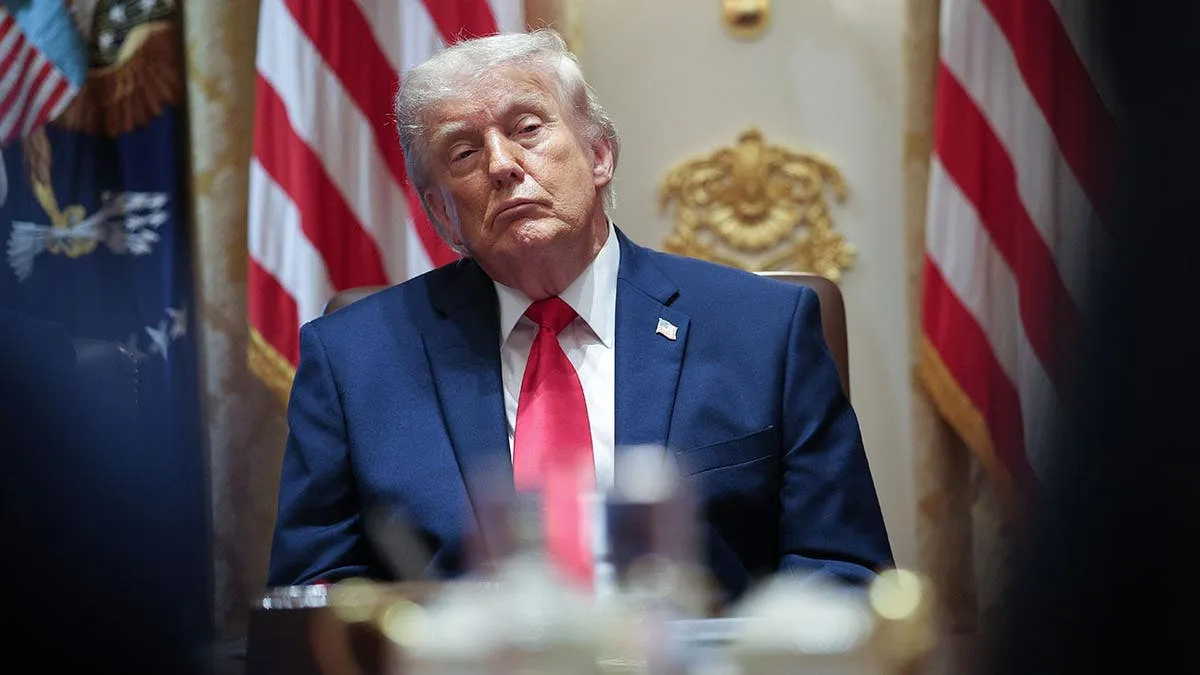
A palpable sense of anxiety has settled across a significant portion of the American populace, driven by a series of technological disruptions, sophisticated hacking attempts, system outages, and the looming advancements of artificial intelligence. This widespread apprehension mirrors historical moments when citizens sought reassurance from leadership amidst uncertainty.
The current climate evokes memories of New York City in the fall of 1990. During his inaugural year as the city's first Black mayor, David Dinkins grappled with a surge in violent crime and high-profile homicides. The mayor, known for his composed demeanor, was often perceived as reacting too passively to the escalating crisis. This led a prominent tabloid to famously declare: "DAVE, DO SOMETHING!" The sentiment was clear: the public needed to see action, any action, to feel secure that the situation was being addressed.
Today, a similar underlying sentiment exists, transcending political affiliations. A pervasive feeling—whether entirely justified or not—that no one is firmly guiding the national response to these complex challenges has significantly amplified the public's unsettled mood.
Administration's Initial Stance Draws Scrutiny
Part of this perception stems from President Trump's characteristic approach, which often involved downplaying threats and concerns. He frequently minimized the severity of events, suggesting they were isolated incidents or simply a part of modern life. "It's life," the president stated. "When you're big and powerful and have all the money, things like that happen. It's fine." This messaging, suggesting that such occurrences are merely an unavoidable aspect of the technological era, initially failed to alleviate public worry.
It reportedly took the White House approximately a week to recognize the counterproductive nature of this initial communication strategy. Further complicating matters was the president's concurrent visit to China, where his amicable remarks regarding leaders Vladimir Putin and Xi Jinping generated additional controversy. While it is acknowledged that this was a long-scheduled trip aimed at discussing nuclear weapons reduction, the timing and tone contributed to the perception of a disconnect from domestic issues.
The administration's communication difficulties were further exacerbated by public appearances from Markwayne Mullin, then serving in a Homeland Security role. Mullin, despite the extensive resources available to him, cited a conversation with "one guy who is very smart with tech" as a basis for suggesting AI might be linked to recent outages. On another occasion, he expressed being "98%" certain that the outages were not a result of a terrorist attack, a statement that offered little concrete assurance.
Adding to the controversy, during a period when a widespread FAA ground stop left millions of Americans stranded, with many sleeping in airport terminals, Mullin utilized a government jet to attend an LSU-Texas football game. He was observed at the event with the CEO of Louisiana's Bollinger Shipyards, a company holding over $2 billion in contracts with the Department of Homeland Security. Mullin defended the trip by stating he was required to use federal aircraft and had reimbursed the government for expenses, drawing parallels to Senator Marco Rubio's past use of government planes to attend his son's football games. However, his apparent failure to grasp the inappropriateness of the timing was widely criticized.
Ultimately, Stephen Miller intervened, reportedly removing Mullin from television appearances. The White House subsequently leaked a narrative to Breitbart highlighting Miller's perceived dexterity in crisis management. An unnamed White House official was quoted praising Stephen's "ability to flawlessly manage a crisis." However, critics argued Miller's intervention was belated, coming after an earlier memo had granted cabinet departments autonomy over their media strategies. Observers suggested that a more centralized approach, favored by figures like Susie Wiles, would have led to an earlier curtailment of Mullin's public statements.
It wasn't until the middle of the following week that the gravity of the "who's in charge" narrative seemed to fully resonate within the administration. Senator JD Vance, scheduled to speak at the New York Times DealBook summit, abruptly canceled his appearance, citing an urgent need to return to Washington for meetings concerning the ongoing wave of outages.
Mounting Cyberattacks and Infrastructure Deficiencies
This attempt to demonstrate leadership was, however, overshadowed by a relentless barrage of negative news. The preceding week saw hackers successfully target 178 companies, including major news organizations like CNN and the BBC, as well as Zoom, demonstrating apparent ease in their intrusions. The Federal Bureau of Investigation itself experienced a security breach on a Friday, marking its second such incident since September. On the same day, a critical outage affecting the highly classified communications network of the National Security Agency was finally resolved after a period of disruption.
These incidents underscored a deeper issue beyond mere messaging—a perceived failure in operational effectiveness.
Concerns also extended to appointments in critical roles. Sean Duffy, then Transportation Secretary, was primarily recognized for his background in reality television (MTV's "The Real World"). He had reportedly spent several weeks during the summer filming a family trip across America, a period some suggested could have been better utilized addressing the nation's aging FAA infrastructure. This drew comparisons to President Biden's appointee, Pete Buttigieg, a former mayor and presidential candidate who also lacked specialized expertise in transportation issues. Historically, the role has often been filled by politically connected individuals, senators, House members, or governors, including Elizabeth Dole, Elaine Chao, Norm Mineta, Andrew Card, Neil Goldschmidt, and Brock Adams.
Further changes included the departure of National Cyber-Director Sean Cairncross, a former top official at the Republican National Committee, late the previous week. The president commented on the move, stating, "I didn’t think that person was good enough," signaling a renewed emphasis on specialized expertise for crucial roles.
President Trump subsequently attempted to deflect blame towards President Biden for the infrastructure issues. However, it was noted that the former president had previously overseen the passage of a bipartisan measure allocating $25 billion for improvements to airports and air traffic control infrastructure. Trump contended that this money was "spent unwisely" and called for an additional $50 billion to repair what he termed an "obsolete" system. His "One Big Beautiful Bill" from the previous year had also included $12.5 billion specifically for modernizing the air traffic control system, a portion of which reportedly remained unspent.
Amidst this ongoing cycle of blame and accusation, the refrain "DONALD, DO SOMETHING!" could easily be imagined echoing the historical demand for action.
The current administration is engaged in efforts to address these multifaceted problems, and any incoming Congress will undoubtedly face similar pressures. The fundamental challenge remains that a complex, decades-old infrastructure, long subject to neglect, cannot be remedied instantly. When coupled with sophisticated hacking, foreign cyberattacks, and the unpredictability of advanced AI, it is understandable why many Americans feel a lack of firm control over national security and stability.
Public Diversions Amidst Unease
Yet, a broader perspective on the "country-in-crisis" narrative reveals a different aspect of public life. Late the previous week, the highly anticipated release of Grand Theft Auto 6 generated nearly $4 billion in sales on its first day, potentially marking the most significant launch of a creative work in entertainment history, as reported by Axios. After a 13-year wait for an update, gamers pre-ordered 32 million copies at $80 each. Reviewers lauded the video game, describing it with terms such as "unbelievable," "astonishing," a "cultural atlas of American life," and a "masterpiece," according to Bloomberg. While its central characters, Jason and Lucia, small-time criminals engaging in violent acts, sparked some debate, the game was almost universally described as addictive.
Similarly, the fervent public discussion surrounding Robert Pattinson's potential casting as the next James Bond, with one outraged fan declaring it the "worst decision in all of cinema history," illustrates the public's engagement with popular culture.
These widespread diversions and distractions suggest that while unease over outages, rising prices, and perceived governmental failures is present, it has not yet escalated into a full-blown national panic. This equilibrium could shift with further cyberattacks and disruptions, but for the majority, daily life continues amidst these broader concerns.
Related Stories
AI's Future and Copyright Law Collide: The Debate Over Fair Use and Creator Compensation
Major news organizations are suing AI companies over the use of copyrighted material for training, sparking a debate on "fair use." The Department of Justice's broad interpretation threatens creator compensation and may
Nov 25
Systemic Stagnation: Why Essential Services and National Security Face Mounting Challenges
Recent widespread disruptions, including an FAA ground stop and major email system collapse, highlight growing systemic vulnerabilities. Meanwhile, an alleged espionage scandal involving a tech CEO and a suspected
Nov 16
Stephen Miller's White House Appointment Sparks Unprecedented Immediate Backlash
Following the announcement of Stephen Miller's new high-level White House role, an intense wave of criticism from media figures and political opponents quickly emerged. Commentators noted the swiftness and ferocity of
Nov 9

Interstate Migration Sparks Political Debate in Texas and Other Conservative States
A growing number of individuals moving from states like California to Texas are maintaining their Democratic voting habits, leading to concerns among long-time residents about the potential political transformation of
Oct 30